
RESILIENCE: THE NEW CHALLENGE OF OUR GENERATION

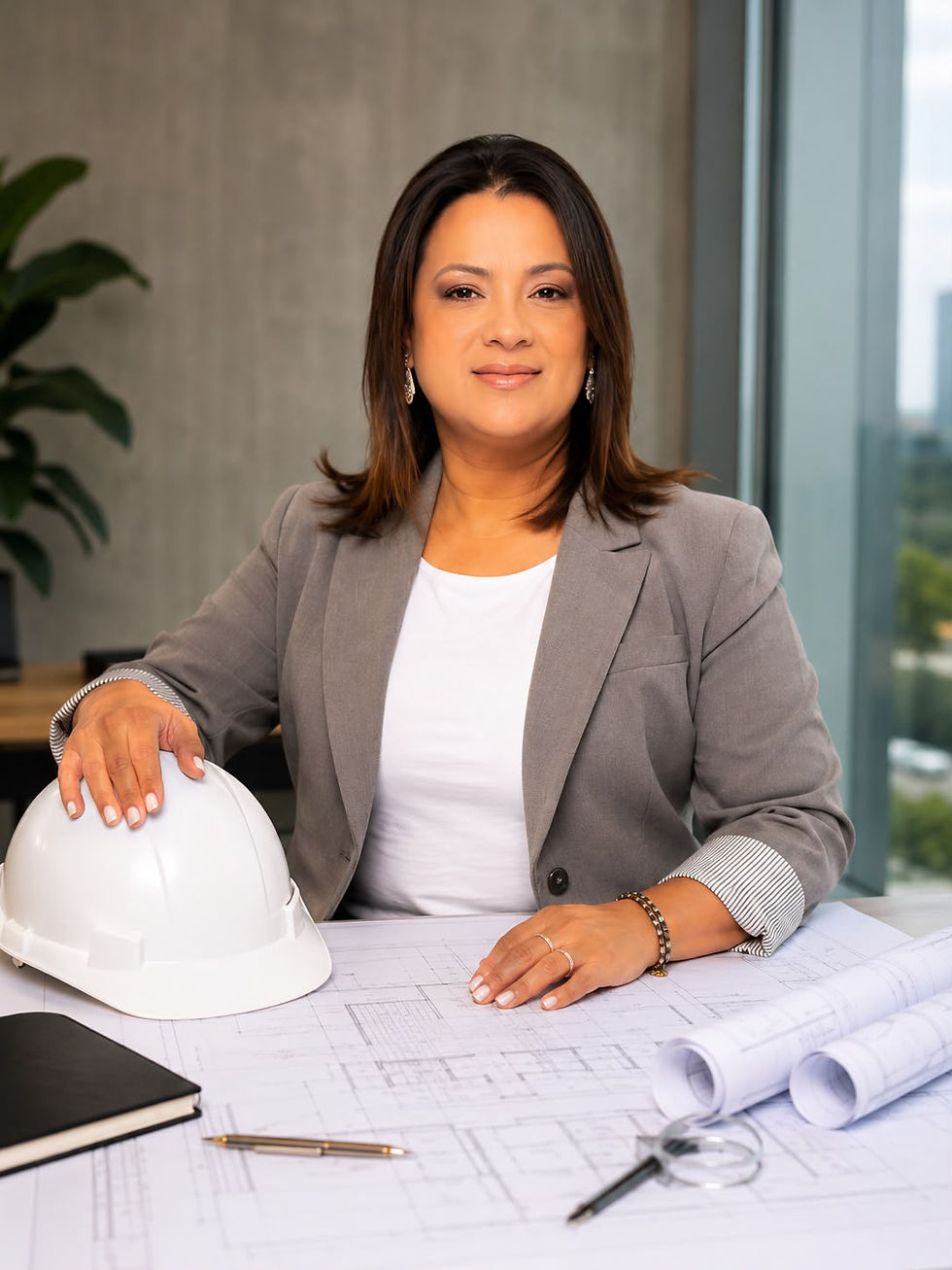
Carolina Arboleda
Administrative Lawyer | Construction Entrepreneur
Why Talk About Resilience Today?
We live in an era in which cities are growing faster than our ability to anticipate the changes the future will bring. For decades we have spoken about development, innovation, infrastructure, and economic growth, yet we have rarely stopped to ask whether we are truly building communities prepared to face the challenges that have already begun.
The word resilience is often associated with a person´s ability to overcome adversity. However, this concept extends far beyond individuals. Today, it should also define the way we conceive our cities, our homes, our institutions, and our infrastructure.
What Does a Resilient Community Really Mean?
A resilient community is not one that never faces problems. It is one that:
• Is prepared to respond to crises.
• Adapts to social change.
• Protects human life and dignity.
• Recovers quickly from adverse events.
The Challenges We Are Already Facing
Today we must respond, among others, to five major challenges:
1. Rapid population aging.
2. Increasingly extreme climate events.
3. Growing pressure on healthcare systems.
4. Rising housing costs.
5. More efficient use of public and private resources.
Resilience is no longer a theoretical concept; it has become a practical necessity.
A Perspective from Law and Construction
As an administrative lawyer, I have come to understand that public policies acquire real value when they improve people´s daily lives. As a construction entrepreneur, I have learned that every technical decision can have an impact that lasts for decades. This dual perspective has allowed me to understand that infrastructure cannot be limited to meeting immediate needs. It must also prepare us for the realities we already know are coming.
The Four Pillars of Resilient Infrastructure
1. Social Pillar
• Inclusive housing.
• Universal accessibility.
• Older adults.
• People with disabilities.
• Reduced mobility.
• Spaces designed for everyone.
2. Environmental Pillar
• Sustainable construction.
• Greater energy efficiency.
• Responsible water use.
• Reduced environmental impact.
• Climate change adaptation.
3. Economic Pillar
• Lower operating costs.
• Durable infrastructure.
• Resource optimization.
• Benefits for families.
• Greater efficiency for the State.
4. Human Pillar
Resilience is not simply about constructing stronger buildings. It is about creating spaces that improve the quality of life of those who live in them.
Building Better, Not Just Building More Resilience also requires responsibility.
It is not enough to build more.
We must build better.
It is not enough to adopt new technologies.
They must respond to real needs.
It is not enough to talk about sustainability.
We must make it part of our everyday practice.
The Future of Construction I firmly believe that the future of construction will not be defined solely by stronger materials or more efficient systems.
It will be determined by our ability to understand that every project has a human dimension that cannot be ignored.
The cities of the future must be:
• More accessible.
• More inclusive.
• More sustainable.
• More resilient.
• Better prepared for future generations.
Resilience is not simply the ability to withstand adversity. Above all, it is the decision toprepare today in order to build a better tomorrow.
www.structta.com - Email: info@structta.com - Whatsaap: +1 (832) 422-2896


Comments